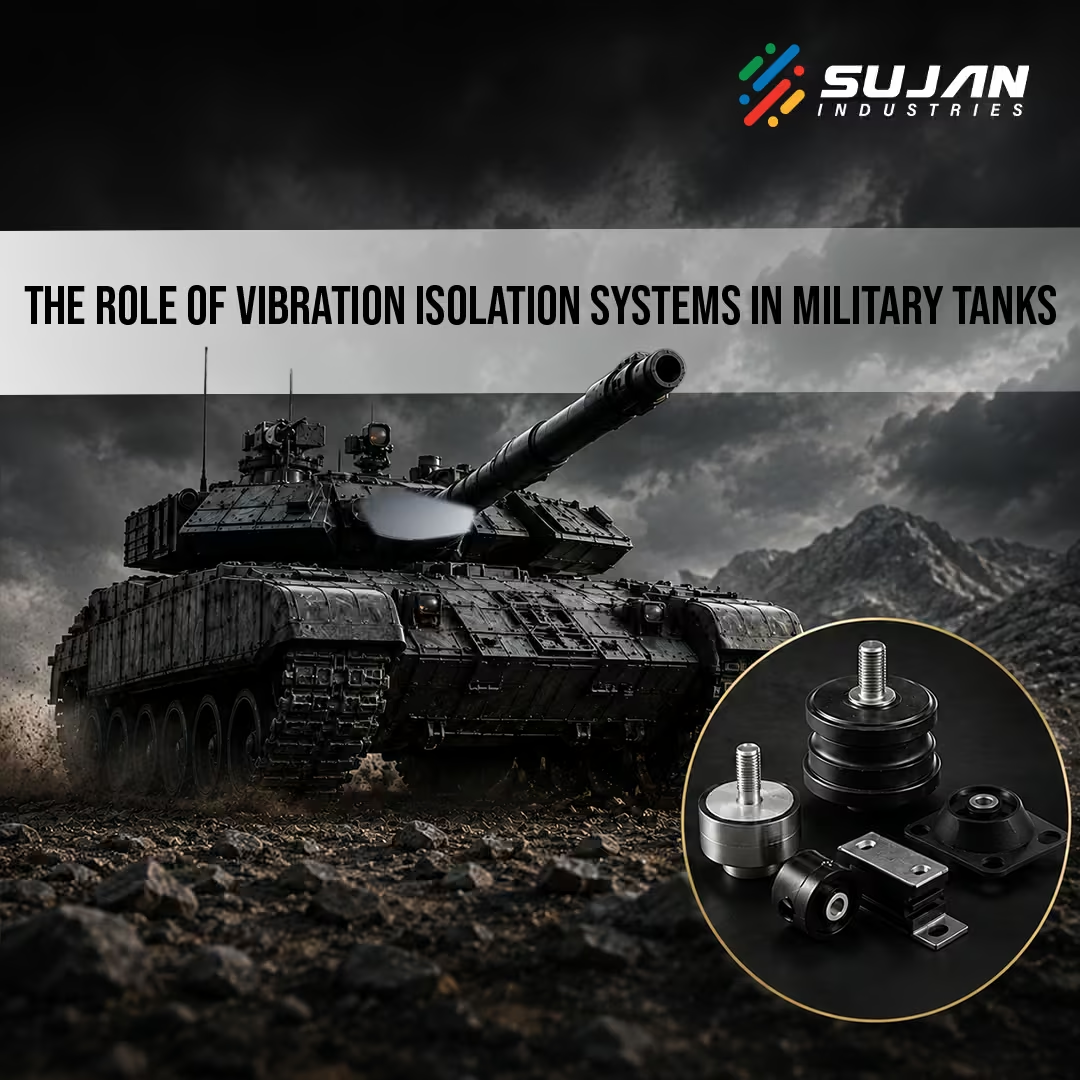
The Role of Vibration Isolation Systems in Military Tanks: What Military Parts Suppliers Get Right
A tank crosses broken ground, rocky trails, and shell craters without slowing down for comfort. Every jolt travels straight through the hull unless something absorbs it first. This is exactly why military parts suppliers spend so much engineering effort on vibration isolation systems today.
These systems protect the crew, the electronics, and the mechanical heart of the vehicle from constant, punishing stress. Without proper isolation, a tank’s operational life would shrink dramatically under real combat conditions. This guide looks at how vibration isolation actually works inside a tank and why sourcing it correctly matters so much.
Why Military Parts Suppliers Focus on Vibration Isolation in Tanks
Tanks operate in conditions that would destroy ordinary vehicle components within weeks of regular use. This is exactly why military parts suppliers treat vibration isolation as a core engineering requirement rather than an optional upgrade.
Protecting Crew and Electronics Inside the Hull
Radar units, navigation systems, and communication equipment sit only centimeters away from a constantly shaking hull. Rubber and metal mounts absorb this shock before it reaches sensitive electronics, keeping mission-critical systems accurate and functional throughout long operations.
Extending Component Life Under Constant Stress
Untreated vibration fatigues metal joints, loosens fasteners, and shortens the working life of major assemblies significantly. Proper isolation spreads that mechanical stress out, which reduces breakdowns and lowers the total cost of maintaining a tank fleet.
Reducing Noise for Better Crew Focus
Constant mechanical noise inside a tank adds fatigue and distraction during already demanding, high-pressure operations. Isolation mounts dampen structural noise as a side benefit, letting crew members concentrate fully on the mission at hand.
How Defense Manufacturers Engineer Isolation for Tracked Vehicles
Building isolation systems for a tracked vehicle is very different from doing the same job for a truck or a car. Defense manufacturers must account for extreme heat, constant impact, and the sheer weight these vehicles carry every single day.
Engine and Powerpack Isolation
A tank’s engine bay regularly runs at very high temperatures, often between one hundred and one hundred twenty degrees Celsius. Mounts here need sustained heat resistance rather than short bursts of protection, since the engine rarely gets a break during active operations.
Defense Manufacturers Prioritize Track Isolation
Track pads and suspension bushings absorb constant impact from uneven terrain, rocks, and rubble underneath the vehicle. Defense manufacturers prioritize materials that resist tearing and compression fatigue, since a failed track component can immobilize a tank mid-mission.
Weight and Load Distribution Challenges
A modern battle tank can weigh well over sixty tones, placing enormous load on every isolation mount fitted underneath it. Engineers must balance cushioning performance against load-bearing capacity, since an undersized mount fails quickly under that pressure.
The Growing Demand for Indigenous Vibration Isolation in India
India’s defense sector has expanded rapidly over the past few years, and component demand has grown right alongside it. It is opening up the doors for real chances for skilled manufacturers of defense components in India who have the capacity to manufacture components as per strict military specifications.
Growth of Domestic Production Statistics
According to the report of Indiablooms from June 2026, it was observed that India’s defense production peaked at ₹1.78 lakh crore in FY 2025-26 due to Aatmanirbhar Bharat and increased participation of the private sector. This means increased demand for reliable local vibration isolators for armored vehicles.
The Importance of Local Sourcing for Tanks
Local sourcing of key parts helps in shortening the supply chain, reducing dependency on imported parts during procurement, and gives defense parts manufacturers in India the chance to establish their own engineering ties for each vehicle platform.
Meeting Strict Military Specifications
Every vibration isolation component destined for a tank must pass rigorous testing before it ever reaches an assembly line. Defense parts manufacturers in India increasingly invest in in-house testing facilities to meet these specifications without relying on external labs.
Why Choose Sujan Industries as One of the Best Military Parts Suppliers?
The case for strong vibration isolation in military tanks becomes clearer the more you look at real operating conditions. This needs to be made without just taking price into account. Getting military parts suppliers who can provide you with reliable products is an all-in-one stop to guaranteeing crew safety, product life, and readiness to perform tasks. This choice gets even more significant with the growth of the Indian defense industry.
Sujan Industries has been involved in the production of rubber and metal-bonded products for the defense, aerospace, and heavy vehicle industry across the whole of India for many years already. Our company designs anti-vibration mounts, track pads, and isolators, which can endure both mechanical and thermal stress. SO, contact us today to discuss vibration isolation for your next defense project.
Slide Background
01. Slide Background
Every slide includes a background, which can be a picture or solid color.
Step 1
To change the background click on the label bar and in the layer window select the style tab.
Step 2
Choose a source from the background top tab then upload an image or pick a background color.
A vibration isolation system helps absorb vibrations coming from the rough terrain. So, its main task is to ensure that the shock won’t get to the crew cabin and the electronic components inside.
Rubber serves to cushion shocks, while metal serves as a source of strength and rigidity in supporting the loads. The combination of the two will be able to withstand both high temperatures and heavy loads more than the individual materials can ever do.
In general, defense manufacturers conduct tests of their components based on the simulation of heat, load, and vibration frequency. It resembles the operational conditions on the battlefield.
Buyers should consider the experience of the military parts suppliers in the production of components, certifications on material quality, and ability to meet the specifications of the defense industry consistently. In addition, speed of response to engineering requirements is crucial.