



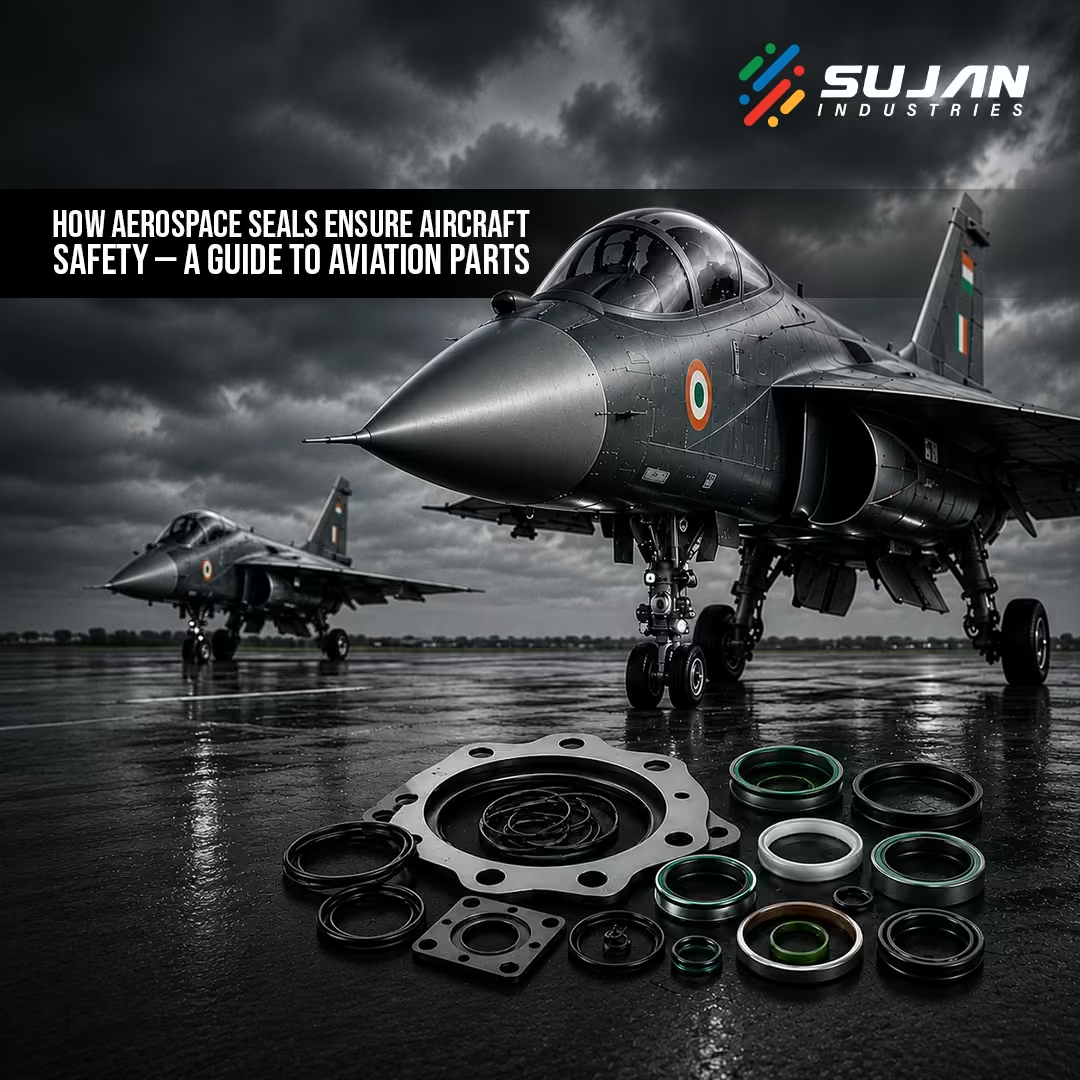
No aircraft leaves the ground without thousands of small components doing their job quietly, and sealing systems are among the most critical of them. A single weak seal can mean a fuel leak, a pressure drop, or worse. That’s why airlines, defence units, and OEMs across the country lean on established aviation parts manufacturers in India for parts built to exacting tolerances. Everything from engine seals to hydraulic gaskets is checked for safety before approval. Here’s a closer look at why this demand keeps growing and what to check before you pick a supplier.
India’s aerospace industry isn’t slowing down anytime soon. As it expands, so does the need for aerospace seals that can hold up inside engines and hydraulic lines without fail.
The aerospace industry of India is not about to rest anytime soon. As the industry grows, so do the demands for reliable aerospace seals that can withstand any conditions in the engines and hydraulic lines. There’s no room for error here; every seal has to handle pressure, heat, and vibration for years on end.
New aircraft are joining fleets to keep pace with growing air travel across India. Globally, the aerospace sealants market is projected to grow at a 4.7% CAGR through 2035, according to Global Market Insights. Naturally, that means MRO facilities and OEMs need suppliers they can count on close to home.
Think of aircraft seals and gaskets as the quiet guardians of the aircraft; unnoticed until something goes wrong. They keep fuel lines, engines, and hydraulics running the way they’re supposed to, no matter the altitude.
Fuel and hydraulic fluid travel through pressurized lines at every stage of flight. Seals are what keep that fluid where it belongs, even as pressure swings wildly. Skip this step, and a system loses pressure fast. This is exactly why aviation parts manufacturers in India take seal performance so seriously, testing it thoroughly at every stage of production.
Anywhere there’s a moving part, pistons, or shafts; there needs to be a seal that actually holds. One bad seal, and dirt or moisture finds its way into places it shouldn’t. Get the sealing right, and landing gear and engines keep performing as intended.
One minute a component is near a hot engine, the next it’s at freezing altitude. Add constant vibration through takeoff and landing, and you get a genuinely tough environment. That’s exactly why materials like silicone and Viton get chosen for the job.
When engines and intake systems are involved, there’s zero tolerance for weak sealing. Aerospace seals have to clear strict quality checks before they ever get installed.
Engine and intake seals sit right where heat and airflow are constant. Their job is simple but non-negotiable; keep oil and fuel from leaking into places they shouldn’t. Even a minor slip here can throw off engine performance. Aviation parts manufacturers in India can’t afford to get this wrong, not when the components are built for tough engine environments.
Silicone, EPDM, Viton, and fluorosilicone; manufacturers pick based on what the seal will actually face. Heat resistance, chemical exposure, and fuel contact; each material handles these differently. The application decides the material, not the other way around.
Good seals mean less wear on engines, pumps, and valves over the years. That translates directly into fewer maintenance headaches and less unplanned downtime. In the end, reliable sealing from a reliable manufacturer like Sujan Industries is really about protecting flight safety for the long haul.
Aviation safety comes down to parts doing exactly what they were designed to do every time. Seals rarely get the credit, but they’re doing a lot of that heavy lifting.
Hydraulic and pneumatic systems need steady pressure to work at all. Seals are what stop that fluid from escaping, cycle after cycle, flight after flight. Without that containment, flight controls and landing gear simply wouldn’t respond properly.
Rain, humidity, dust, and sudden temperature swings; aircraft deal with all of it on every single flight. Seals act as the barrier that keeps moisture and debris out of internal parts. That barrier is what stretches out the working life of critical assemblies.
A seal that’s worn out or fitted poorly tends to turn into an expensive, unplanned repair. Regular inspections and better materials cut that risk down significantly. Get the seal right from day one, and most failures never happen at all.
Aerospace seals don’t get approved on looks; they have to clear real technical and regulatory demands. India’s aerospace and defense market is on track to touch nearly USD 70 billion by 2030, fueled by Make in India and a strong push toward indigenous manufacturing (Modern Manufacturing India). That’s exactly why buyers, including any supplier of aftermarket parts in India, expect consistency in every single batch.
A seal has to work just as well at freezing altitude as it does near a hot engine bay. It also needs to hold pressure without cracking or losing shape. All of this gets tested well before a part ever reaches production.
Fuel, hydraulic oil, and cleaning agents are in contact with aircraft seals constantly. Pick the wrong material, and you’re looking at swelling, cracking, or early failure. Compounds like nitrile and fluorosilicone exist precisely to avoid that outcome.
Even a tiny gap in tolerance can turn into a leak down the line. That’s why manufacturers check dimensions, hardness, and compression set before anything gets signed off. It’s this precision that makes sure every seal actually fits and performs as intended.
Established aerospace component manufacturers in India don’t just make one type of seal; they supply across dozens of aircraft systems. Skilled aviation parts manufacturers engineer each part around its specific job, not a one-size-fits-all approach.
Near combustion zones, engine seals and fuel gaskets are the last line of defense against dangerous leaks. They have to withstand serious heat and constant fuel contact. Get this sealing wrong, and engine safety is the first thing at risk.
Landing gear and flap systems run on hydraulic and pneumatic pressure, plain and simple. The seals inside these systems face repeated motion without ever wearing thin. Any failure here has a direct line to aircraft control.
Avionics bays, cabin sections, and equipment housings; all of it needs protecting too. Seals keep moisture, dust, and vibration away from electronics that can’t afford interference. That protection is what keeps everything running smoothly across the aircraft’s life.
Finding the right partner among aviation parts manufacturers in India really comes down to three things: proven experience, tested materials, and consistency in every batch of aerospace seals and gaskets you order.
At Sujan Industries, we’ve built aircraft seals for the Indian Air Force and HAL for years. Our engineers push every part to its limits before it ever leaves the facility. Ready to upgrade your sealing solutions? Get in touch with us today.